Course Project / Robotics
SI190C: 6-DOF Robot Arm Integration
A robot-arm systems project from end-effector design through obstacle-aware motion planning.
SI190C Robotics Integrated Practice · Group 5 · ShanghaiTech University · Summer 2025
SI190C
Overview
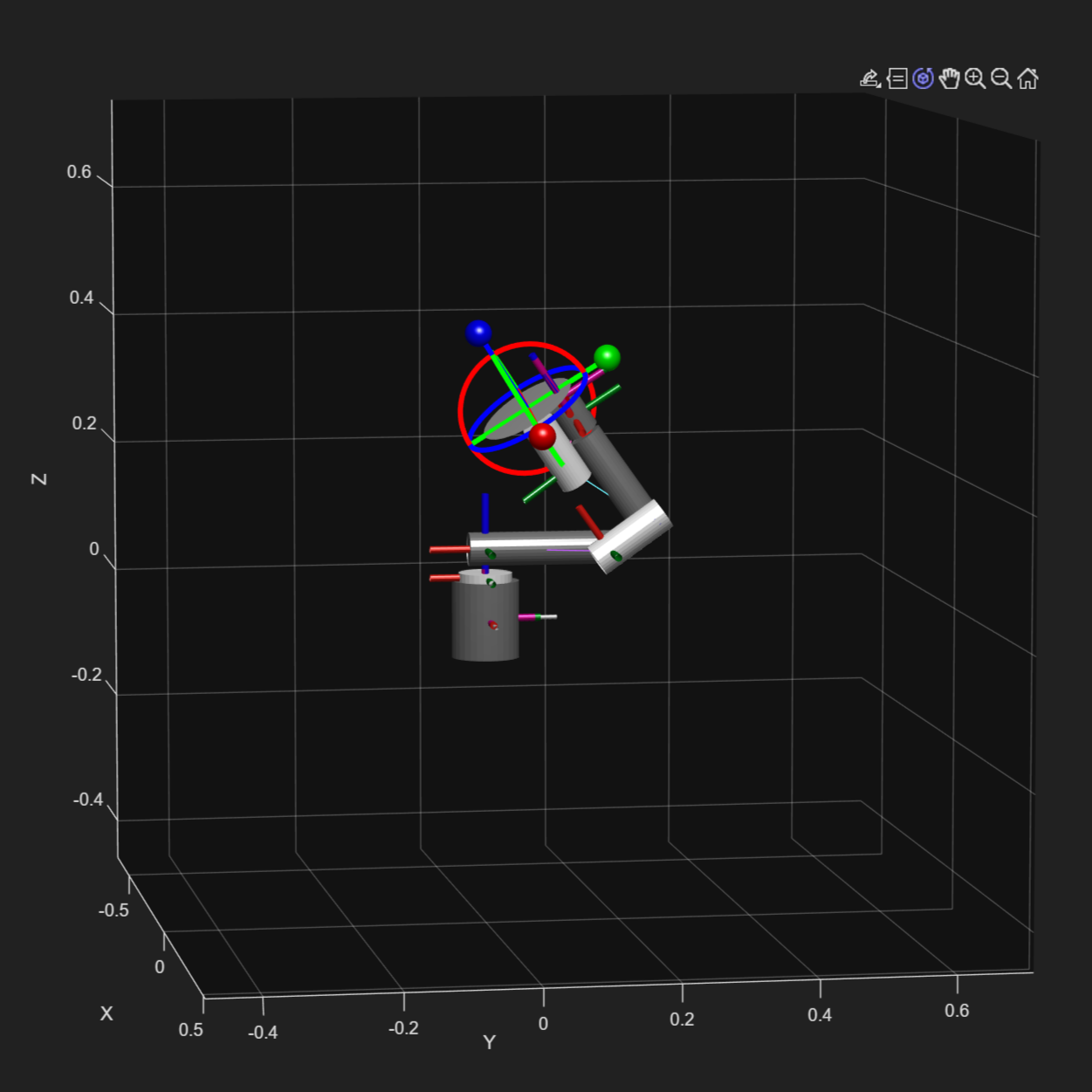
This course project integrates a 6-DOF robot arm across mechanical assembly, end-effector modeling and iteration, DH-parameter kinematics, camera and hand-eye calibration, ROS2 / Gazebo simulation, and A*-based obstacle-aware motion planning. The page preserves reviewable artifacts and conclusions instead of reproducing the raw slide deck.
Project Summary
- Assembled six reducers, 3D-printed structural components, and serial motor wiring into a basic arm, then verified joint motion through the provided visualization interface.
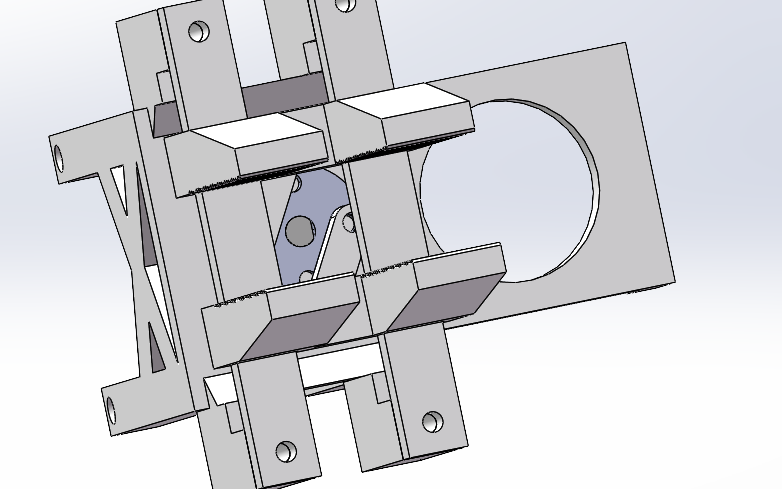
- Iterated through four end-effector concepts before selecting a linkage mechanism that achieved light-payload grasping.
- Built the DH model, forward and inverse kinematics, and ROS2 pose control, including an extension path for treating the gripper as a seventh joint.
- Validated modeling, trajectory tracking, end-effector monitoring, and obstacle-aware planning in MATLAB, Robotics Toolbox, and Gazebo.
System Workstreams
Workstream
Assembly and Gripper
- Built the 6-DOF arm and debugged serial motor connections.
- Iterated through four gripper designs, moving from leadscrew concepts to a linkage end-effector.
- The final mechanism achieved light-payload grasping while exposing precision, payload, and stall-protection limits.
Workstream
Kinematics and Control
- Measured and assembled the six-joint DH parameter table.
- Implemented forward and inverse kinematics with wrist-center decomposition.
- Used quaternions for ROS2 end-effector pose representation to avoid Euler-angle gimbal lock.
Workstream
Calibration and Perception
- Applied an iterative least-squares error-compensation model to DH calibration.
- Estimated camera intrinsics and distortion from 25 valid chessboard images.
- Compared multiple hand-eye calibration methods within the AX = XB formulation.
Workstream
Simulation and Planning
- Built models in MATLAB Robotics System Toolbox and a third-party toolbox.
- Published joint commands and monitored /tf end-effector motion in ROS2 / Gazebo.
- Used continuous initial guesses and denser samples to reduce IK jumps, then planned obstacle-aware paths with A*.
Key Stage Outcomes
serial robot arm
final linkage mechanism
valid chessboard images
average improvement reported in the presentation
Calibration and Error Analysis
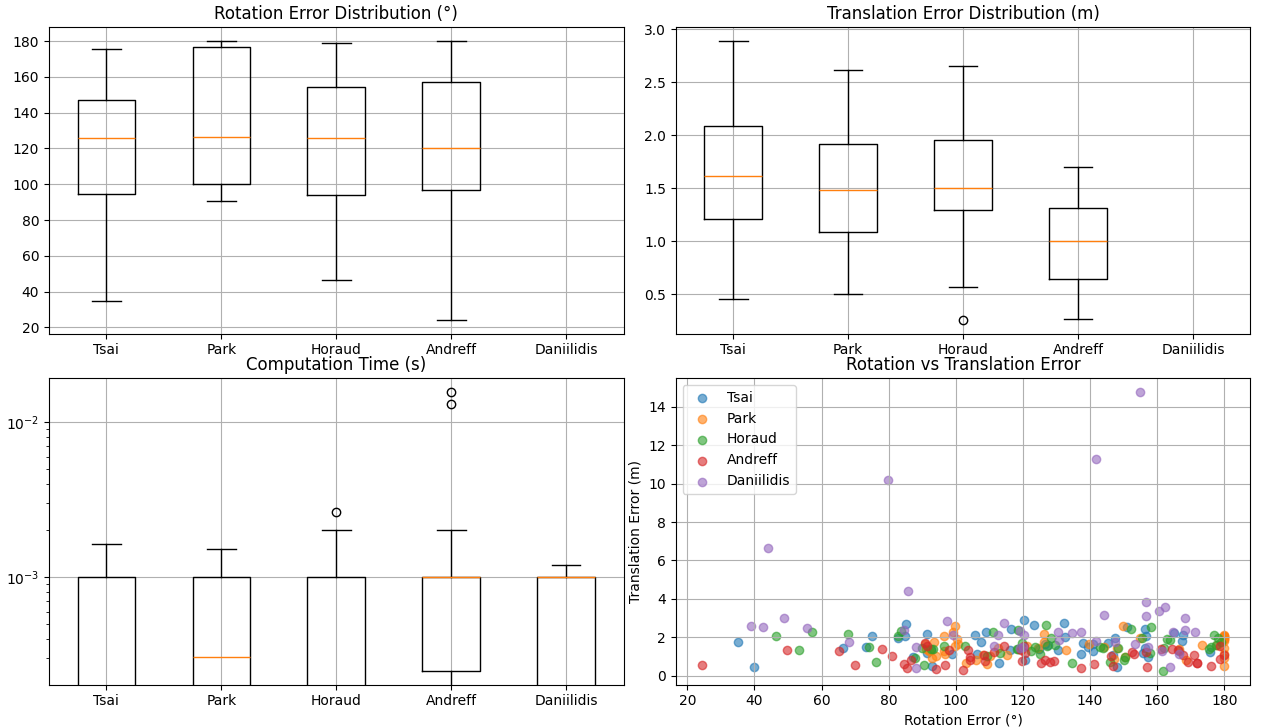
DH calibration models the difference between sensed and theoretical poses with an error-compensation matrix and estimates parameter corrections through iterative least squares. Hand-eye calibration uses AX = XB and compares Tsai-Lenz, Park, Horaud, Andreff, and Daniilidis methods; the presentation also documents insufficient excitation and unreliable translation estimates as open limitations.
Finding
- The reported average DH error changed from 0.042002 to 0.033400, described as an approximately 20.5% improvement.
- Camera calibration recorded a reprojection error of 0.16898 after estimating intrinsics and distortion from chessboard observations.
- The hand-eye rotation matrix was checked for unit row norms, orthogonality, and determinant; translation still requires validation with more diverse robot poses.
Simulation and Motion Planning
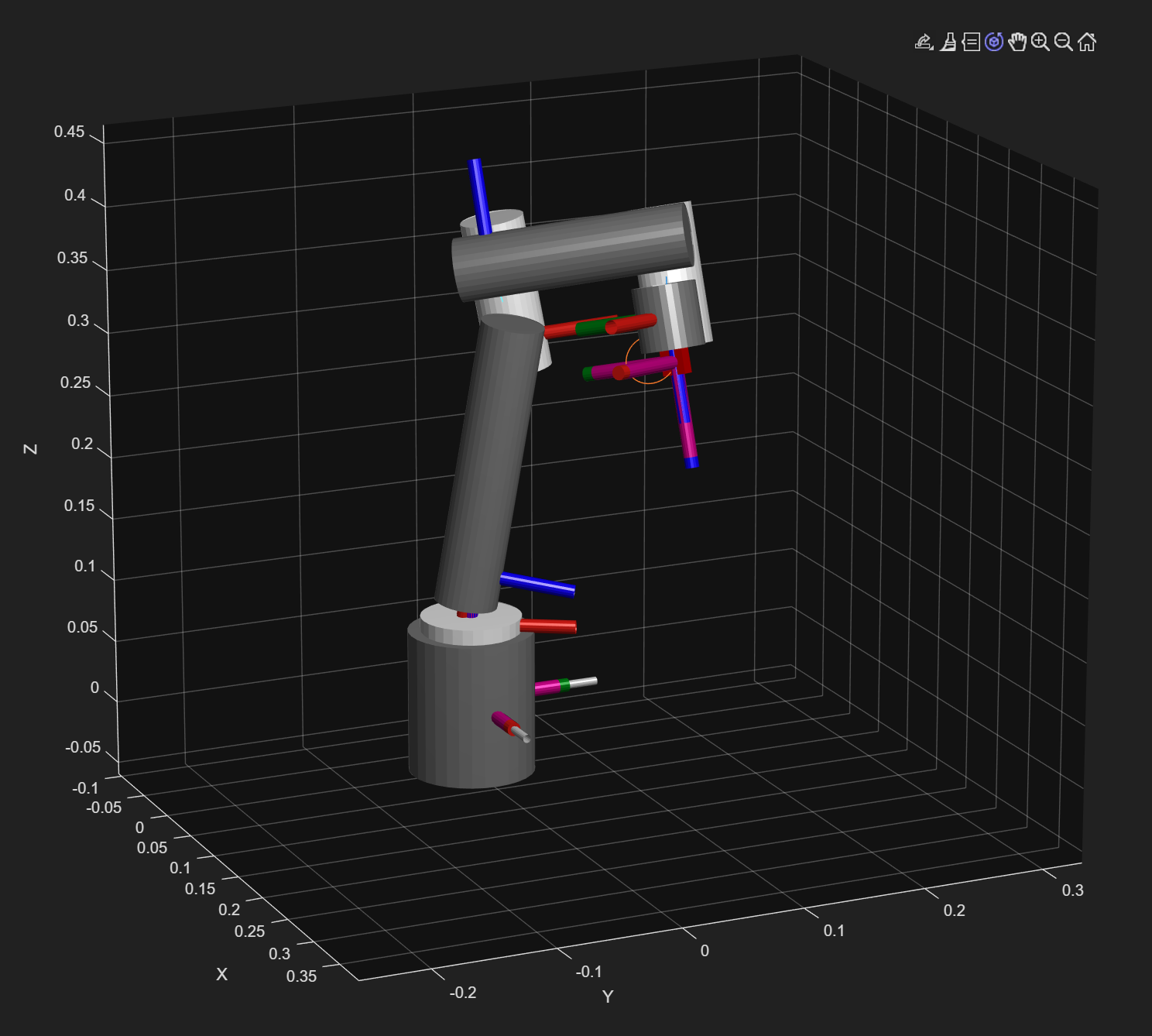
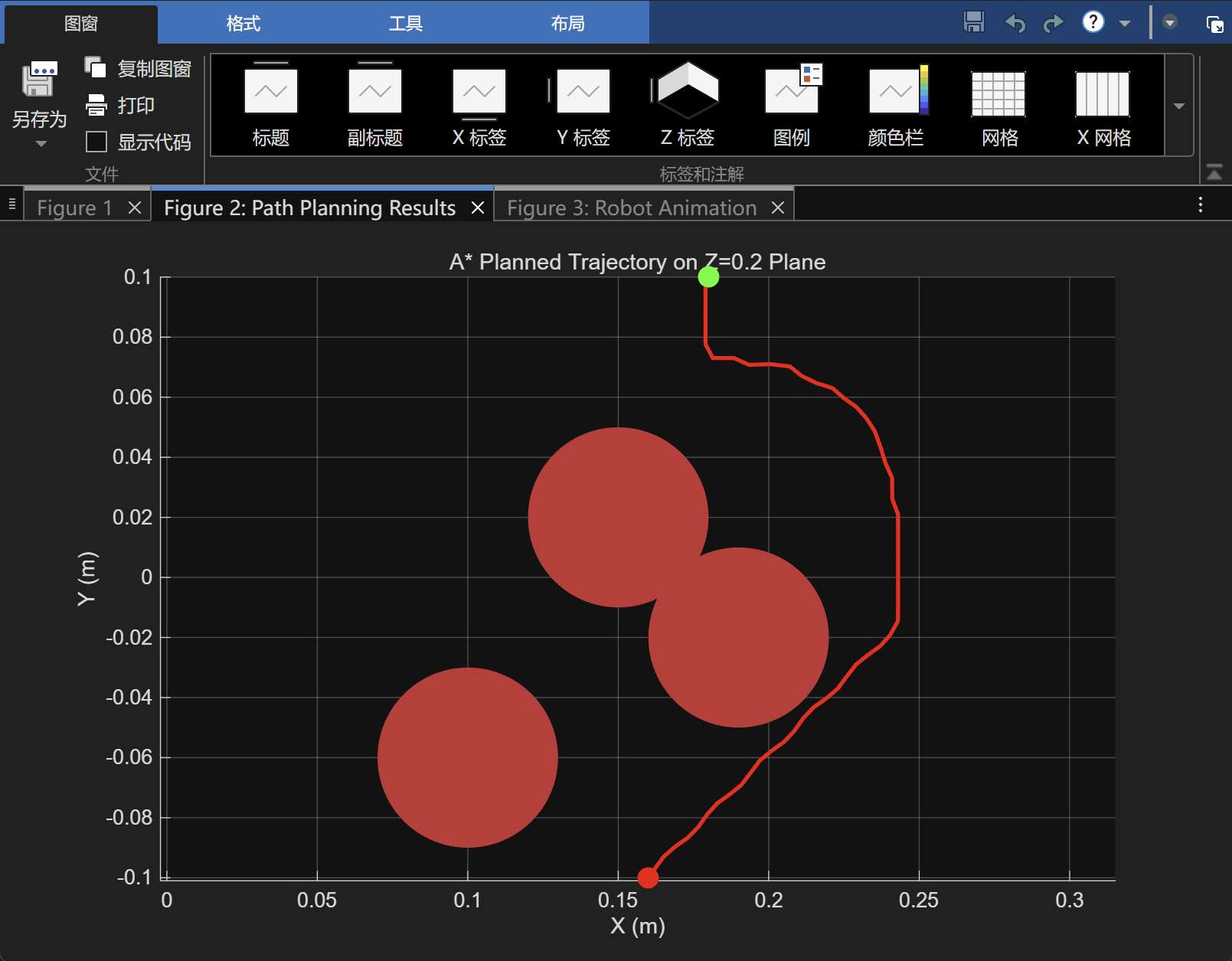
The digital workflow covers interactive URDF inspection, a DH-based rigidBodyTree, circular trajectory tracking, and Gazebo end-effector monitoring. Motion planning marks obstacle safety margins in an occupancy grid, then combines A* search, spline interpolation, and continuous inverse-kinematics seeds to generate smoother joint motion.
Project Note
Project Note
This is a Group 5 integrated-practice report. The page describes the system, process, and findings recorded in the final presentation, and deliberately does not attribute unspecified team work to an individual contributor.